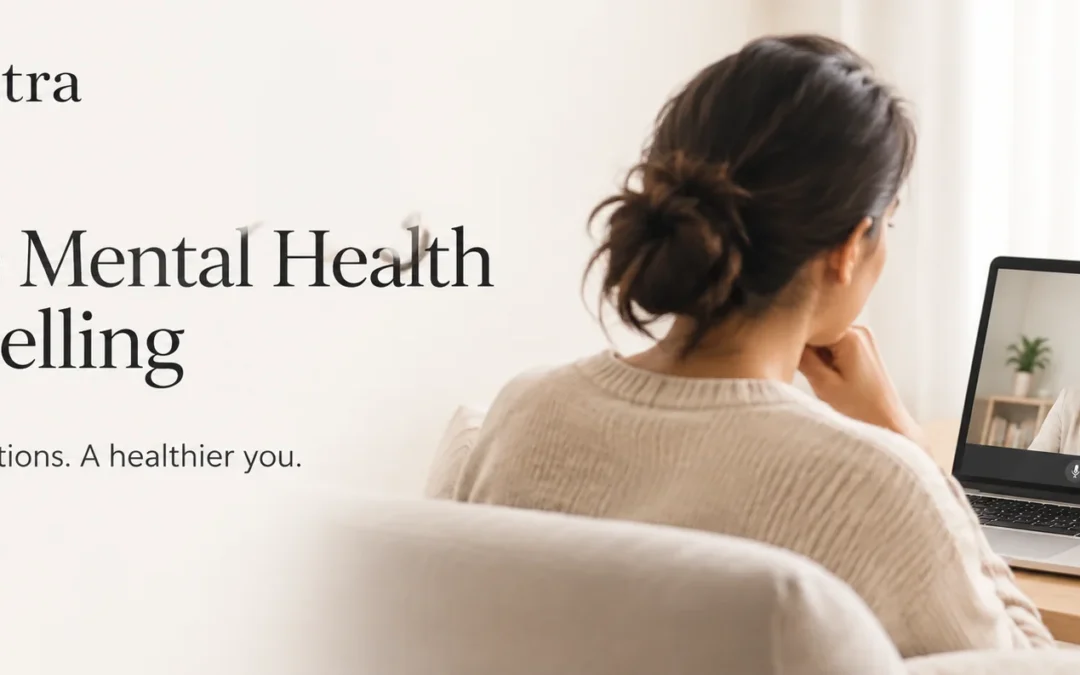
Online Mental Health Counselling most of us are moving too fast to stop and check in with ourselves, and the toll on our emotional wellbeing often builds quietly, well before we realise it. That is why many people are now choosing Online Mental Health Counselling rather than waiting for the right in-person appointment. Psychologist Neeri Batra has worked for years with people facing anxiety, stress, strained relationships, and those harder-to-describe struggles that don’t have a label. Her online practice is based on the belief that help should reach you wherever you are.
This piece looks at what this kind of therapy actually involves, why so many people are choosing Online Mental Health Counselling Services over waiting rooms and fixed office hours, and how Neeri Batra brings warmth, structure, and genuine clinical care into every virtual session, from the very first conversation onward.
What Is Online Mental Health Counselling?
Online counselling offers the same therapy you would find in a clinic, delivered by video call, phone, or secure messaging. What you talk about, how your privacy is protected, and the care you receive don’t change. Only the place does. For people stretched between work, family, and daily demands, that can be what turns “I’ll get to it someday” into an actual first session.
Neeri Batra likes to say that therapy should meet people where they are, and she means it literally. Sessions can take place from a bedroom, a parked car on a lunch break, or a quiet corner of a shared home. What counts is feeling safe enough to be honest, and many clients find their own familiar space makes that easier than a clinic ever did.
Why Online Mental Health Counselling Services Are Becoming the Preferred Choice
It would be easy to assume people choose Online Mental Health Counselling Services purely out of convenience, and while flexibility plays a part, the real reasons run deeper.
- Comfort and privacy: Speaking from a familiar space often lowers the emotional guard that a clinical office can unintentionally raise.
- Wider access: Someone living outside a major city is no longer limited to whichever psychologist happens to practice nearby.
- Consistency: Travel, weather, or a hectic schedule no longer has to mean cancelling a session altogether.
- Reduced hesitation: For many people, especially those seeking help for the first time, the idea of walking into a clinic feels like a bigger step than logging into a video call.
Neeri Batra has seen this shift firsthand in her own practice. For clients who waited a long time before asking for help, sometimes years, online support often becomes the thing that makes taking the first step feel doable.
Neeri Batra’s Approach to Online Mental Health Counselling
Early sessions are about understanding what the client is carrying, whether that is anxiety, low mood, a difficult relationship, or stress that has built up quietly over time. This groundwork shapes the work that follows, session by session.
Grounded in Evidence
She draws on established, evidence-based approaches such as Cognitive Behavioural Therapy, adjusting the pace and structure to each client instead of applying one method to everyone. This helps keep online sessions effective as well as comfortable.
Real Connection, Even Through a Screen
Many people wonder before starting whether a screen can carry the same warmth as an in-person room. Neeri’s sessions are built on attentive listening, eye contact, and the same care she would bring to any face-to-face conversation. Many clients find that within a few minutes the format fades into the background, and the conversation feels much like sitting across from someone in a quiet room.
Benefits of Online Mental Health Therapy and Virtual Mental Health Counselling
Choosing Online Mental Health Therapy over the traditional clinic model brings a set of practical and emotional advantages that clients consistently mention:
- No commute, no waiting room – sessions can be fit into an existing routine according to your and therapist’s mutual convenience.
- A judgement-free starting point – Virtual Mental Health Counselling removes the small but real hesitation of being seen walking into a therapist’s office.
- Flexible scheduling – early morning or evening slots are often easier to arrange online than in person.
- Continuity during travel or relocation – clients don’t have to restart therapy elsewhere just because their address changed.
None of this makes online sessions a lesser version of care. Clients who choose Online Mental Health Counselling Services often say the flexibility itself removed the biggest barrier standing between them and getting help at all.
Who Can Benefit From Online Psychological Counselling?
Neeri Batra works with a wide range of people, including those who are:
- Managing everyday anxiety or a persistent low mood
- Navigating a difficult relationship, breakup, or family conflict
- Adjusting to a major life change, such as a new job, a move, or becoming a parent
- Feeling stretched thin by work pressure or burnout
- Simply wanting a steady, confidential space to think out loud
Parents also bring adolescents with behavioural concerns, school-related stress, or difficulty managing emotions
for support and since this format can feel less intimidating for a young person than a formal clinic visit.
What to Expect in a Session With Neeri Batra
The first few sessions with Neeri Batra are less about diagnosis and more about listening. She takes time to understand a client’s history, current concerns, and what they hope therapy will help with, before shaping a loose plan for the sessions ahead.
Later sessions tend to follow a natural rhythm: checking in on the week, revisiting patterns discussed earlier, and working through specific tools or reflections the client can carry into daily life. Clients are also welcome to bring up anything that didn’t get covered in a previous session, since therapy rarely moves in a perfectly straight line. Confidentiality is maintained exactly as it would be in an in-person practice, and clients are free to ask about privacy or platform security at any point.
How Many Sessions Are Typically Needed?
There’s no single answer, and Neeri Batra tends to be upfront about that rather than promising a fixed timeline. Some clients come in with a specific, short-term concern and find that a handful of sessions is enough to feel steadier. Others are working through something longer-standing, like a pattern in relationships or a persistent low mood, and choose to stay in therapy for several months to keep building on what they’ve learned. For some, that check-in happens naturally every few weeks; for others, it’s a more considered conversation revisited every month or so, depending on what feels most useful at the time. The point isn’t to rush toward an endpoint; it’s to keep checking in on whether the sessions are still useful and adjusting the pace as needed.
Common Myths About Mental Health Counselling Online
- “It’s less effective than in-person therapy.” Research and clinical experience alike suggest the therapeutic relationship, not the medium, is what drives progress. Many clients progress just as meaningfully through screens as they might, in an office.
- “It’s for issues.” Mental Health Counselling Online is used for everything from stress to persistent anxiety and depression and each client is assessed individually rather than assumed to need only lighter support because the session happens online.
- “Privacy can’t really be guaranteed online.” Reputable practitioners use encrypted platforms. Follow the same confidentiality standards required in traditional practice and Neeri Batra is no exception.
How to Choose the Right Online Mental Health Counselling Services
Not every online therapy experience will feel like a fit. That’s completely normal. A few things worth considering:
- Check that the psychologist is qualified and registered to practice.
- Notice whether the first conversation feels comfortable since rapport matters much a credentials
- Ask how sessions are structured and how progress will be discussed over time.
- Consider whether the psychologist’s areas of focus such as anxiety, relationships or stress match what you’re looking for support with.
Neeri Batra encourages anyone considering therapy to treat the session as a conversation rather than a commitment. If Online Mental Health Counselling Services
with her don’t feel like the match, that feedback is useful too and she would love to address the same in the session.
Conclusion
Choosing to reach out for support is rarely easy. The format of that support shouldn’t be what stands in the way. Online Mental Health Counselling has made it possible for people to get care without rearranging their entire day around it. Neeri Batra brings the attentiveness, structure and evidence-based care to a video call that she would bring to any in-person room, which’s ultimately what makes therapy work. If you’ve been considering it, a conversation with her is a low-pressure way to find out whether this kind of support is the step for you.
Frequently Asked Questions
1. Is Online Mental Health Counselling as Effective as In-Person Therapy?
For concerns, yes. What drives progress in therapy is the relationship between client and psychologist and the consistency of the work, both of which translate well to a video or phone format.
2. How Do I Book a Session With Neeri Batra?
Sessions can usually be arranged directly through her practice with a conversation to understand your concerns before scheduling appointments.
3. What Kind of Issues Can Online Psychological Counselling Help With?
Common concerns include anxiety, low mood, stress, relationship difficulties and adjustment to life changes along with emotional concerns in adolescents and children.
4. Is Online Therapy Confidential and Secure?
Yes. Sessions are conducted on platforms and the same confidentiality standards that apply to in-person practice apply to Online Mental Health Counselling Services well.
5. How long is one Session ?
Most sessions run for around 45 to 60 minutes though this can vary slightly depending on the client needs.
6. Do I Need Any Special Equipment for Virtual Mental Health Counselling?
No. A stable internet connection, a phone or computer and a private space to talk are usually all that is needed to begin.